


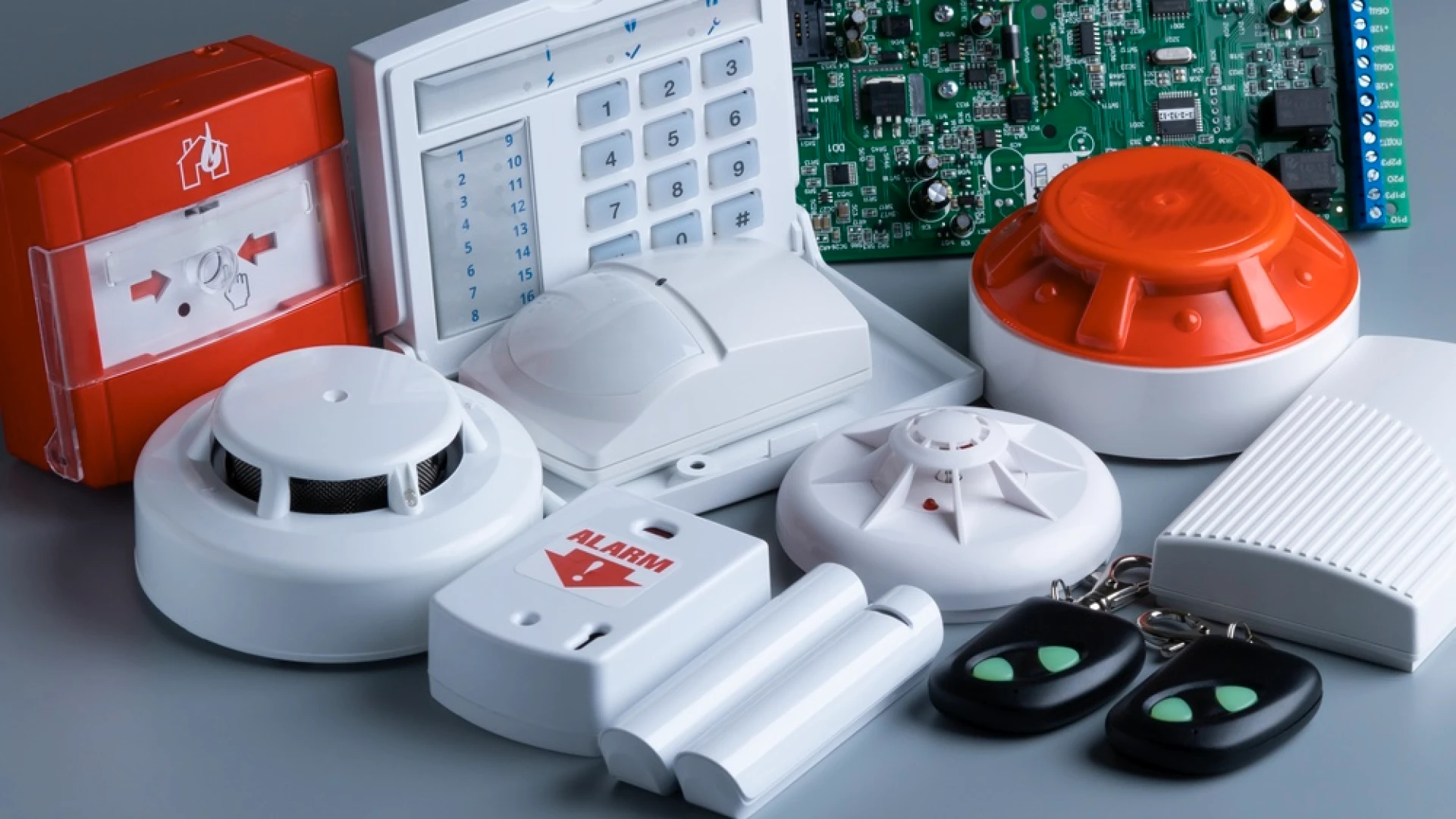
The Role of Smart Sensors in Fire Detection Systems
With the advancement of security technologies, fire detection systems have undergone a significant transformation. Replacing traditional systems, smart sensor technology aims to detect fire risks at a much earlier stage, minimizing loss of life and property. Especially in large-scale structures, industrial facilities, and smart buildings, the use of these systems has become essential.
What Are Fire Detection Systems?
Fire safety systems are designed to detect fires at an early stage, trigger alarms, and initiate response processes. These systems analyze parameters such as smoke, heat, and gas to identify potential fire risks.
With technological advancements, these systems have become more sensitive, faster, and more integrated.
Core Working Principle of Smart Sensors
Smart sensors are advanced devices that detect environmental changes, collect data, and analyze it. In fire detection systems, these sensors can detect even the smallest environmental variations.
This allows risky situations to be identified before a fire occurs, enabling preventive actions.
The Role of Smoke Detectors
Smoke detectors are one of the fundamental components of fire detection systems. They detect smoke particles in the environment and trigger alarm mechanisms.
Next-generation detectors integrated with smart sensors minimize false alarms while providing more accurate results.
Heat Sensors and Thermal Analysis
Heat sensors detect sudden changes in ambient temperature and identify fire risks. They play a critical role, especially in early stages when smoke is not yet present.
Advanced thermal analysis technologies allow systems to distinguish between normal and abnormal temperature changes.
Multi-Sensor Technology
Smart fire detection systems use multiple sensor types together to achieve more reliable results. The combined operation of smoke, heat, and gas sensors significantly reduces error rates.
This approach ensures maximum safety, especially in large and complex structures.
The Importance of Early Warning Systems
Fire early warning systems detect potential fires at the initial stage and enable rapid response. These systems prevent fires from spreading and reduce severe damage.
Early warning is especially vital in areas with high human density.
Integration in Smart Buildings
Smart building security integrates fire detection systems with other security solutions. Working alongside CCTV, access control, and alarm systems, it provides a holistic security approach.
This integration allows all security processes to be managed from a central system.
Use in Industrial Environments
Industrial fire safety is critical in high-risk areas. Factories, power plants, and production facilities require advanced systems equipped with smart sensors.
These systems detect potential fires early, preventing production losses and workplace accidents.
Data Analytics and Artificial Intelligence Support
AI-powered security systems analyze data from sensors to deliver faster and more accurate results. These systems can perform risk analysis using historical data.
This enables preventive measures before a fire occurs, increasing overall safety.
Maintenance and Continuity
Security automation requires regular maintenance of fire detection systems. Proper functioning of sensors is critical for system effectiveness.
Periodic checks ensure consistently high system performance.
The Future of Fire Detection Technologies
In the future, smart sensor technology will evolve to analyze environmental factors with greater precision. With IoT integration, systems will become more intelligent and autonomous.
These advancements will open a new era in fire safety.
Investment and Security Advantage
Investing in fire detection systems is not only a necessity but also a strategic advantage for businesses. These systems minimize risks and create safe working environments.
In modern security approaches, solutions supported by smart sensors have become an indispensable standard.